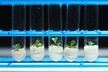


Lowering the pH of the nutrient solution can be an effective method to suppress root rot diseases in liquid-based hydroponic systems such as NFT and DWC. Based on recent experiences implementing this approach, an article in E-Gro provides practical guidance for introducing this low-cost strategy to manage root rot diseases in hydroponically grown leafy greens.
Plant growth, as well as that of other living organisms, is generally affected by the pH of the nutrient solution. The optimum pH for plant growth typically ranges from 5.5 to 6.5. Outside of this range, plant growth is compromised, not due to the direct effect of pH (hydrogen ion concentration), but because of altered nutrient availability for plants to take up. In addition, low pH is known to affect the motility of oomycete zoospores, thereby reducing the spread of pathogens in plant production systems. A series of studies at The Ohio State University (Gillespie et al., 2019, 2020; Bates, 2022) demonstrated the efficacy of low pH nutrient solutions (pH 4.0–4.5) in controlling Pythium root rot.
The procedure is straightforward: increase the amount of acid (e.g., sulfuric or nitric acid) in the nutrient solution. In some cases, it may also be necessary to increase overall nutrient concentrations (or specific cations) to compensate for reduced nutrient uptake by plants. Figure 1 shows basil roots grown in nutrient solutions with or without Pythium zoospore inoculation. Roots grown at pH 4.0 remained healthy, whereas those at pH 5.5 showed typical disease symptoms and the presence of oospores, indicating establishment of the Pythium life cycle.